Innovative Plasma Treatments for Scalp Conditions and Hair Loss
Cold Atmospheric Plasma, Ozone Plasma, and Argon Plasma offer effective solutions for various scalp issues, including thinning hair, dandruff, and psoriasis, simultaneously addressing multiple concerns in a single treatment session. Additionally, plasma treatments stimulate hair follicles by promoting blood circulation and cellular regeneration, which can enhance hair growth and improve overall scalp health. This multifaceted approach allows patients to experience a more holistic solution for their hair loss, all while minimizing the discomfort commonly associated with more invasive procedures.
12/14/20255 min read
Understanding Plasma Treatments
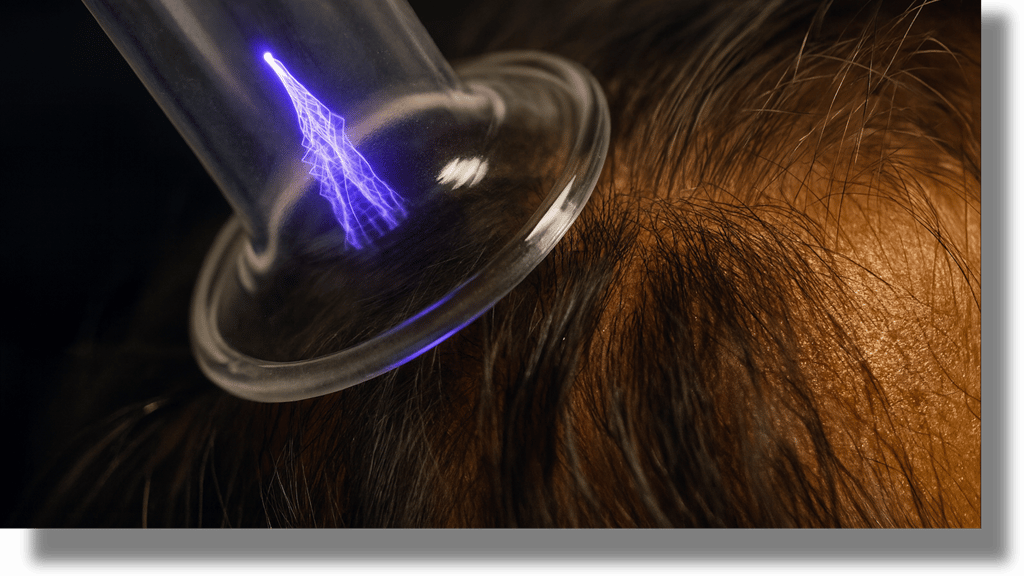
Plasma treatments represent a promising avenue in the medical field, particularly in the realms of dermatology and trichology. Plasma, often referred to as the fourth state of matter, is an ionized gas consisting of free electrons and ions. It can be generated through various methods, giving rise to distinct types such as cold atmospheric plasma, ozone plasma, and argon plasma. Each of these types possesses unique physical properties that enable their application in treating diverse scalp conditions and hair loss.
Cold atmospheric plasma (CAP) is created at atmospheric pressure and low temperatures, allowing it to interact with biological tissues without causing thermal damage. This form of plasma has been shown to exhibit antimicrobial properties and promote healing, making it a valuable tool for addressing scalp conditions such as psoriasis and dandruff. In contrast, ozone plasma, which is generated by exposing oxygen to high voltage, is recognized for its oxidative capabilities. Its application can help in the disinfection of the scalp and hair follicles, thereby fostering a healthier environment for hair growth.
Argon plasma is another innovative type of plasma that operates primarily through the excitation of argon gas. This form not only facilitates the delivery of therapeutic agents but also aids in stimulating cellular activity. Its unique thermal and non-thermal processes provide a versatile framework for regenerative therapies targeting hair loss. As a result, argon plasma is becoming a focal point in research related to enhancing hair follicle regeneration and rejuvenation.
The physical properties of these plasmas—such as temperature, ion density, and reactive species generation—play critical roles in their medical applications. By understanding these interactions, researchers and clinicians can harness the potential of plasma treatments to develop effective solutions for treating scalp conditions and combating hair loss, thereby paving the way for innovative therapeutic options.
Mechanisms of Action in Hair Restoration
Innovative plasma treatments, including cold atmospheric plasma, ozone plasma, and argon plasma, are gaining attention for their potential to restore hair growth and combat hair loss. The biological mechanisms through which these therapies operate are rooted in their ability to positively influence hair follicle stem cells. A critical aspect of this process involves the activation of the wnt/β-catenin signaling pathway, which plays a pivotal role in regulating hair follicle development and cycling. This pathway is essential for triggering and maintaining hair growth, highlighting the importance of ensuring its optimal functioning.
Cold atmospheric plasma, for instance, has been shown to effectively stimulate hair follicle stem cells by enhancing cell proliferation. This proliferation is crucial for generating new hair follicles and supporting existing ones, thereby counteracting the effects of hair loss. Ozone plasma treatment also contributes to this by penetrating the scalp and delivering reactive species that support the regeneration of damaged tissues, further promoting hair follicle activity.
Moreover, oxidative stress is a significant factor in hair loss, as it can adversely affect hair follicle health. The application of these plasma treatments helps mitigate oxidative stress by balancing free radicals in the scalp environment. This reduction in oxidative stress not only promotes healthier follicles but also fosters an optimal environment for hair growth. Inflammatory responses can similarly hamper hair restoration efforts. Plasma treatments have demonstrated the capacity to reduce inflammation, allowing for a more favorable condition for hair follicles to thrive. The cumulative effect of these mechanisms establishes a comprehensive approach to combating hair loss.
Understanding these biological processes highlights the efficacy of innovative plasma treatments in stimulating hair follicle activity and promoting hair regeneration. This insight provides a foundation for further exploration into the potential of these therapies in hair restoration and influences ongoing research in the field.
Scientific Evidence and Effectiveness
Research into innovative plasma treatments for various scalp conditions, particularly forms of alopecia, has gained increasing attention in recent years. Studies investigating cold atmospheric plasma, ozone plasma, and argon plasma therapies have revealed promising results in the quest for effective hair loss treatments. For instance, a clinical trial published in the Journal of Dermatological Treatment demonstrated that cold atmospheric plasma significantly improved hair density in patients suffering from androgenetic alopecia. The randomized controlled trial (RCT) involved a cohort of 60 individuals and showed a statistically significant increase in hair regrowth after just 12 weeks of treatment.
Ozone plasma, another emerging therapy, has been studied for its ability to promote scalp healing and stimulate hair follicles. A study featured in The International Journal of Trichology reported that ozone plasma therapy not only enhanced scalp health but also improved the overall quality of hair. The results indicated that patients experienced a notable reduction in hair fall and an increase in the thickness and vitality of existing hair. These findings are indicative of ozone's potential as a supportive treatment option for alopecia, complementing traditional therapies.
Furthermore, argon plasma has gained traction among practitioners for its multifaceted benefits. A research article published in Lasers in Surgery and Medicine highlighted its efficacy in enhancing collagen production and blood circulation within the scalp. The study concluded that this therapeutic modality could effectively combat various types of hair loss, with patients reporting noticeable improvements in hair regrowth following a series of treatments.
Overall, the scientific evidence supporting the effectiveness of plasma therapies in treating scalp conditions and promoting hair regrowth is compelling. Various clinical and laboratory studies have substantiated the positive outcomes associated with these innovative approaches, providing practitioners and patients with reliable options in the pursuit of improved scalp health and restored hair. As additional research continues to emerge, the integration of plasma treatments in modern dermatological practices appears increasingly viable.
Safety, Benefits, and Future Directions
As innovative plasma treatments for scalp conditions and hair loss continue to gain traction in dermatological practice, understanding their safety profile is of paramount importance. Clinical studies suggest that plasma therapies exhibit a favorable safety record compared to traditional hair loss treatments, such as minoxidil and finasteride, which can have systemic side effects. While patients may experience mild transient reactions such as warmth and tingling sensations, and occasional mild discomfort in the treatment area, these effects typically resolve quickly. Furthermore, plasma treatments are non-invasive and reduce the risk of complications associated with surgical hair restoration methods.
The benefits of plasma therapies are numerous. First and foremost, they offer an effective solution for various scalp issues, including thinning hair, dandruff, and psoriasis, simultaneously addressing multiple concerns in a single treatment session. Additionally, plasma treatments stimulate hair follicles by promoting blood circulation and cellular regeneration, which can enhance hair growth and improve overall scalp health. This multifaceted approach allows patients to experience a more holistic solution for their hair loss, all while minimizing the discomfort commonly associated with more invasive procedures.
Looking ahead, the future of plasma technology for the treatment of scalp conditions and hair loss appears promising. Ongoing research aims to improve techniques for plasma extraction, application methods, and delivery systems, with the goal of maximizing therapeutic benefits. Advances in personalized medicine may also pave the way for tailored plasma treatments based on individual patient profiles, ensuring optimal outcomes. As clinical practices continue to embrace these innovative therapies, it is essential to remain informed about potential developments and their implications for patients seeking effective and safe solutions for scalp health and hair restoration. Overall, the evolution of plasma treatments could significantly transform the landscape of hair loss management in the years to come.
© 2024. All rights reserved | Privacy Policy